Tai Chi for Beginners Over 60: How to Start With a Chair and Ten Minutes
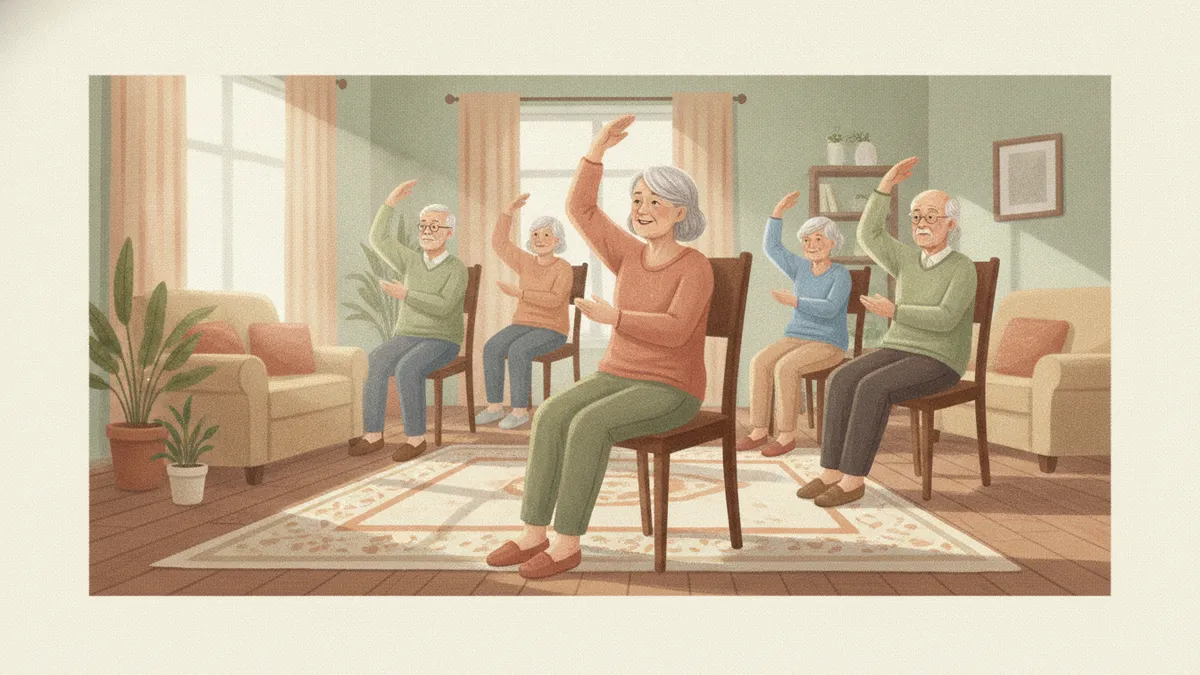
If you are over 60 and curious about tai chi, you are not late. You are in good company. Tai chi has been practiced by older adults for generations precisely because it is slow, kind and adjustable. Nobody expects you to be flexible, athletic or experienced. You only need a chair, a few minutes and a willingness to go slowly.
This guide walks you through the very first steps: what to expect, how to set up, how to take your first week and how to keep going.
Common worries, answered plainly
"I am not flexible." Tai chi does not require flexibility. Movements are small and flowing, and you set the size.
"I have poor balance." That is a reason to start seated. The chair gives you stability while you learn the movements.
"I am not coordinated." Coordination grows with repetition. The movements are simple at first, and you repeat them many times.
"I will look silly." At home, nobody is watching. And in tai chi, nobody is competing.
"I do not have time." Ten minutes a day is enough to begin.
"I tried exercise before and quit." Fair. That is why we focus on a routine that is easy to start and gentle enough to keep.
What tai chi feels like for a beginner
Tai chi is sometimes called meditation in motion. Your arms move in slow arcs. Your torso turns a little. You breathe steadily. You follow your hands with your eyes. The speed is so slow that it can feel strange at first, as if you were moving through water.
Within a few sessions, the strangeness gives way to something more pleasant: a feeling of settling, of slowing down and of being present in your body. That is the part people tend to enjoy most.
Why begin in a chair
You can learn standing tai chi later if you like. For now, a chair offers real advantages.
- Security. You are not worried about falling, so your body can relax.
- Focus. All your attention goes to the arms, spine and breath.
- Accessibility. You can practice on any day, in any room.
- Gradual progress. You build familiarity with the movements before adding anything harder.
Your first week, day by day
| Day | Time | What to do |
|---|---|---|
| 1 | 5 minutes | Sit tall, breathe slowly, shoulder rolls |
| 2 | 5 minutes | Add wrist circles and raising and lowering the arms |
| 3 | 7 minutes | Add the first tai chi arc, raise the ball |
| 4 | Rest | Or repeat day 3 gently |
| 5 | 8 minutes | Add part the curtains, one side then the other |
| 6 | 10 minutes | Link the two movements into a loop |
| 7 | 10 minutes | Repeat, and notice how you feel compared with day 1 |
Keep the pace slow, the movement small and your breath easy. That is all there is to it.
Setting yourself up for success
The chair: sturdy, no wheels, flat seat, height so your feet rest flat with knees at an easy angle.
The space: a spot where you can open your arms without hitting anything, ideally with natural light.
The time: same time daily if possible. After breakfast works well for many.
The clothing: loose enough to move, simple, nothing that catches.
The attitude: curious, not critical. You are learning a new skill, and the first few sessions are for exploring.
What beginners often get wrong
- Going too fast. Slow is the point.
- Doing too much on day one. Five minutes is plenty.
- Gripping the chair. Let the hands rest and the shoulders drop.
- Holding the breath. Aim for a long, easy exhale.
- Expecting instant results. The practice rewards patience.
- Skipping rest. A day off is fine.
Guidance helps more than willpower
When you are new, the biggest challenge is not the movement. It is knowing what to do next. A guide removes that burden.
Flowsit chair tai chi plan was built for exactly this. A short quiz about your comfort level and goals creates a personalized 28-day chair tai chi plan. Each day gives you a seated session of about 10 to 15 minutes, with movements guided step by step and a timer to keep time. Your progress and daily streak are tracked so you can see the days adding up, and the plan grows gradually so that you are never thrown into something too hard.
You do not need to be good at it, and you do not need to memorize anything. You just sit down and follow along.
Safety for beginners over 60
- Check with your doctor before starting, especially if you have a health condition, take medication that affects balance, have recent surgery or feel dizzy.
- Use a stable chair on a non-slip floor.
- Keep movements within a comfortable range.
- Stop if you feel pain, dizziness or shortness of breath.
- Stand up slowly at the end.
Tai chi is gentle movement and a mindful practice. It is not a treatment and does not promise to change a medical condition.
What to expect over the first month
In the first week, you are learning the setting and the rhythm. In the second, the movements start to feel familiar. By the third week, many people find that they look forward to the session. By the fourth, the practice becomes a natural part of the day.
The changes people describe are usually modest and personal: a calmer mood after the session, easier shoulders, a feeling of doing something good for themselves. Those are worth having, and they build on one another.
Keep it social if you like
Tai chi does not have to be solitary. Practice beside a partner or friend, each on your own chair. Share your streak with a family member. Some people like to tell a grandchild what they are learning, which turns the habit into a conversation.
A note on patience
Learning tai chi is like learning to knit or to play a simple tune. The first sessions feel awkward, then slightly less awkward, and then one day the movements simply flow. You will not notice the exact day it changes. What you will notice is that you stop thinking about where your hands go and start noticing how your breathing feels. That shift is the real beginning of the practice, and it arrives by showing up, not by trying harder.
Give yourself at least two weeks before you judge it. Keep the sessions short. Reward yourself with something pleasant afterwards. Let the practice be easy.
Where to go next
For a deeper look at the seated approach for older adults, read chair tai chi for seniors. To learn the movements in detail, see seated tai chi. And for a full month of structure, take a look at the 28-day chair workout.