Seated Tai Chi: Six Core Movements and How to Sequence Them
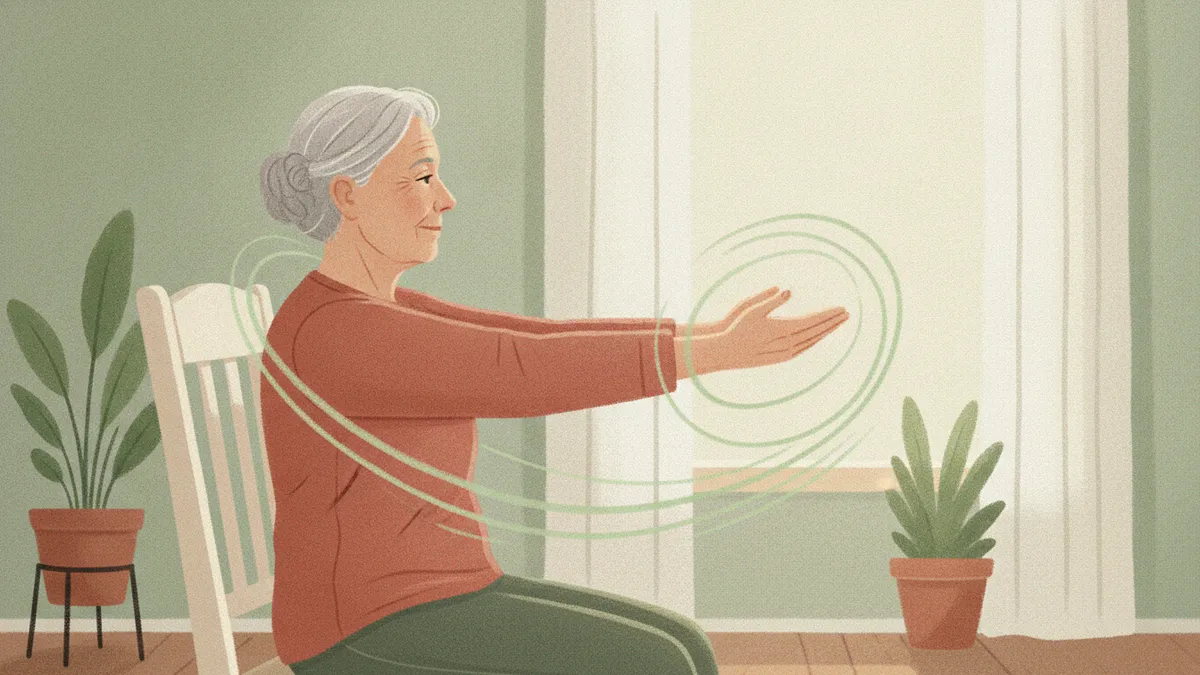
Seated tai chi is the quickest route into the practice: you keep the flowing arm and torso movements and set aside the standing. If you have watched a standing tai chi video and thought it looked beautiful but out of reach, this is the version that meets you where you are.
Below you will find the six movements most seated routines are built from, how to link them into a smooth sequence, how to match the breathing, and how to keep a simple routine going from week to week.
Before you move: posture in the chair
Every movement rests on the same base. Spend a moment building it.
- Sit forward. Slide to the front half of the seat so your spine can lengthen.
- Feet flat, hip-width apart. Knees over ankles, as if standing, but resting.
- Soften the shoulders. Lift them toward your ears, let them fall, and leave them down.
- Float the head. Imagine a thread gently lifting the crown of your head.
- Rest the hands. Palms on thighs, fingers loose.
This small setup is the secret to the "light and rooted" feeling that tai chi is known for.
Six core seated movements
1. Opening the breath
Hands rest in your lap. As you inhale, let the hands float up in front of you to chest height, palms facing down. As you exhale, press them softly down toward your thighs. Repeat six times, matching the breath. It is a gentle warm-up and a way to arrive.
2. Raise the ball
Imagine a soft ball resting low in front of you. Cup your hands beneath it and slowly lift it to chest height, then let it sink. Keep elbows soft and wrists relaxed. This teaches the basic arc of tai chi: nothing is stiff, nothing is rushed.
3. Part the mane
One hand rises to chest height while the other presses down by the opposite hip, as if separating two light curtains. Turn the chest a few degrees toward the rising hand, eyes following. Return to center, then switch sides.
4. Wave hands like clouds
Hands trace slow, alternating arcs in front of the body, like clouds drifting past. Your torso turns slightly from side to side while your hips stay quiet in the chair. This is one of the most soothing movements and a favorite in short sessions.
5. Gentle push
Palms rise, turn forward and press away softly as if easing open a heavy door. Then they draw back toward the chest, palms turning inward. Exhale on the push, inhale on the return.
6. Spinal sway
Hands rest on knees. Breathe in and gently lean forward, keeping the back long. Breathe out and sit up, then lean slightly back, only as far as is comfortable. Add a small side sway if it feels good. It keeps the middle of the body in motion.
Linking the movements into a sequence
A tai chi routine is a flow, so the transitions matter as much as the poses. A reliable ten-minute template:
| Minutes | What you do |
|---|---|
| 0 to 2 | Posture, breathing, opening the breath |
| 2 to 4 | Shoulder rolls, wrist circles, neck turns |
| 4 to 8 | Raise the ball, part the mane, wave hands like clouds (repeat the set twice) |
| 8 to 9 | Gentle push, three times |
| 9 to 10 | Spinal sway, then still sitting with a long exhale |
Every time you finish a movement, let the hands return to a neutral place before starting the next. That brief pause is the glue.
Matching breath and movement
You do not need to be exact. A simple rule works: inhale when the hands rise or draw back, exhale when they sink or press out. If you lose the rhythm, return to slow breathing for two cycles and start again. The breath is the metronome and the guide.
How slow is slow enough?
A good test: if someone watching could not tell whether you were moving or still at a glance, you are close. Aim to take four to six seconds for each arc. Slowness makes the movement kinder to your joints and makes it easier to notice tension.
Common questions about adapting the moves
My shoulders are tight. Keep the arcs lower and smaller. Raise the arms only to where it feels easy.
My wrists feel stiff. Let the hands hang soft rather than flexed, and add gentle wrist circles first.
I get lost in the sequence. Reduce the routine to three movements and repeat. Familiarity builds confidence.
I tire quickly. Sessions of five minutes still count. Add one minute a week.
Turning a routine into a plan
Knowing the movements and doing them every day are two different things. A short sequence you can recite is useful. A structure that tells you what to do on day 9 and day 23 is better.
Flowsit chair tai chi plan turns seated tai chi into a 28-day path. A short quiz sets the starting level and focus, and each day brings a guided session of about 10 to 15 minutes. Movements are shown step by step with a timer, so you do not have to count or time yourself, and your progress and daily streak are recorded. Instead of searching for what to do next, you open the day and follow along.
What to expect and when to check in
Seated tai chi is gentle and calming. Many people enjoy it as a quiet part of the day. It is not a treatment and does not promise to change a medical condition. If you have pain, dizziness, a recent injury or a long-term condition, it is sensible to talk to your doctor or physical therapist before you start, and to stop any movement that hurts.
A tip for the first fortnight
Keep the practice at the same time each day. Link it to something you never skip, like your morning coffee. Put the chair in a spot where it is easy to sit, and leave the space tidy so there is nothing to prepare. The easier it is to start, the more likely you will.
Where to go from here
To see how these movements affect steadiness, read about tai chi for balance. If you prefer to learn from screens, compare tai chi videos with a guided plan. And if you want a full structure, see the 28-day chair workout.