Chair Tai Chi: How to Start Moving Gently From Your Seat
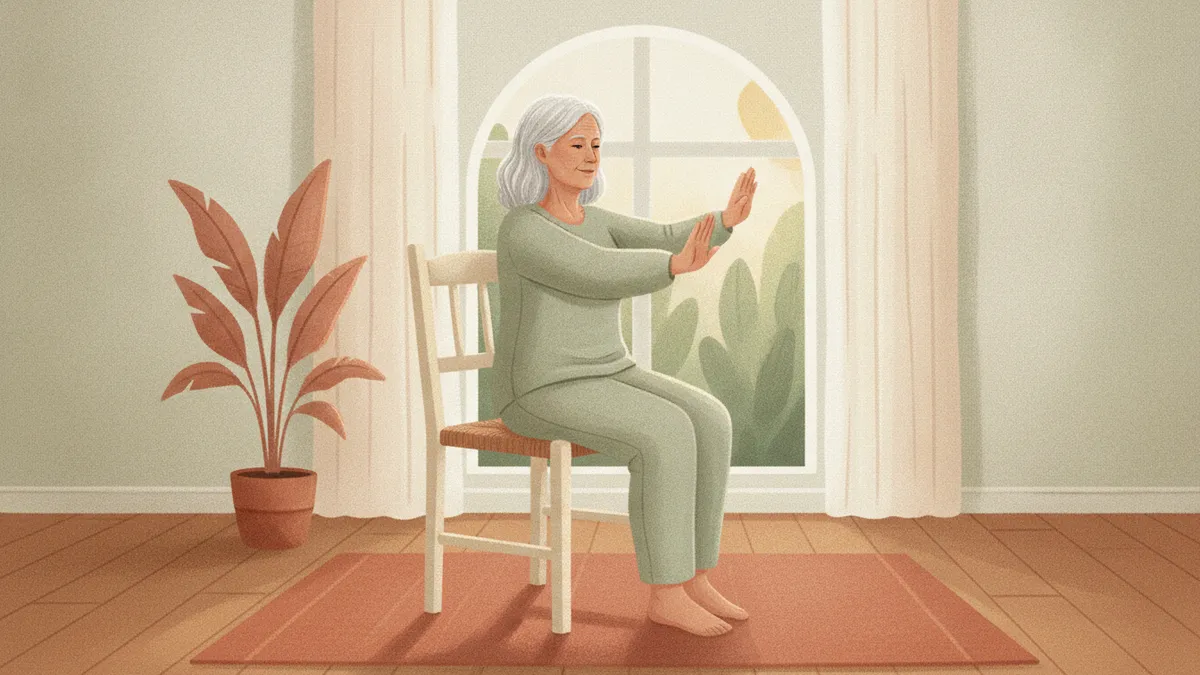
Chair tai chi is tai chi practiced sitting down: the same slow, flowing arm and spine movements, without the standing. That one change opens the door for a lot of people. If your knees complain after a few minutes on your feet, if your balance is not what it was, or if you simply feel more at ease with something solid under you, a chair gives you a way to move that feels safe from the first minute.
This guide explains what a chair tai chi session actually looks like, what you need, how to avoid the beginner mistakes, and how to turn a few good sessions into a daily habit you keep.
What chair tai chi looks like, minute by minute
Picture a ten-minute session. You sit tall near the front half of the seat, feet flat, hands resting on your thighs. You breathe in through the nose for a slow count and let the exhale run a little longer. That is the first minute, and it already counts.
Then the movement begins. Your arms rise as if you were lifting a large soft ball, pause, and then sink. Your hands part in a slow arc like opening a curtain. Your torso turns a few degrees, never forcing, while your eyes follow your hands. Nothing is fast. Nothing snaps. The goal is to keep the same unhurried speed from the first move to the last, so your attention can rest on how the movement feels.
A good session is built from a handful of simple ideas:
- Settle. One or two minutes of sitting, breathing and loosening the shoulders.
- Warm the joints. Gentle wrist circles, shoulder rolls, neck turns and a slow spinal sway.
- Flow. Three to five tai chi movements repeated in a rhythm, such as raising the arms, parting the hands, wave hands like clouds, and pushing forward softly.
- Close. Hands return to the lap, one last long exhale, a moment of stillness.
That is it. There is nothing to memorize beforehand if the sequence is shown step by step.
Why people choose it over standing tai chi
Standing tai chi is wonderful, but it asks a lot of your legs and balance, and the learning curve is real. Chair tai chi lowers the entry cost.
You can start today. No class to find, no mat to unroll, no special shoes. If you have a chair, you have a studio.
It fits tired days. Some mornings are stiff. Sitting lets you go as gently as you need to and still finish a session, which keeps the streak alive.
It is easier to stay in the movement. When you are not worried about falling, you can pay attention to the actual lesson of tai chi: relax, breathe, move slowly.
It scales. The same chair can host a very small, careful session on a hard day and a fuller, more expressive one on a good day.
The pieces of a good chair tai chi routine
Most beginners do well when a routine covers five areas. If a program leaves one out, you can feel it.
- Breath. Slow, easy, nasal breathing sets the tempo for everything else.
- Shoulders and neck. These hold a lot of everyday tension. Slow rolls and tilts give quick relief from that tight, hunched feeling.
- Arms and hands. The classic tai chi arcs live here. They are what most people picture when they think of the practice.
- Spine. Gentle twists, sways and leaning forward and back keep the middle of the body moving.
- Attention. The mind softly follows the hands. That quiet focus is a big part of why people describe the practice as calming.
Common beginner mistakes
Moving too fast. Speed is the first thing to go wrong. If you feel rushed, cut the range, not the slowness.
Gripping the chair. Hands should rest, not clutch. If your knuckles whiten, drop your shoulders and start again.
Sitting back and slumping. Slide forward a little so your spine can stand on its own, with your back close to, but not collapsed against, the backrest.
Holding the breath. If you notice it, just let the next exhale be longer. No need to count perfectly.
Pushing through discomfort. Gentle movement should feel pleasant or neutral. Sharp pain means stop. If something feels wrong, ask your doctor or physical therapist before you continue.
Setting up your chair
Choose a sturdy, stable chair with a flat seat, about knee height so your thighs are roughly level and your feet rest flat. Skip rolling chairs and anything wobbly. Place it on a non-slip floor with a bit of room around you, and keep a glass of water nearby.
If your chair is too high, put a firm cushion or a low box under your feet. If it is too low, sit on a folded towel. Small adjustments make a big difference in how relaxed your shoulders feel.
From one session to a habit
The hardest part of any movement practice is not the movement. It is showing up again tomorrow. This is where structure helps.
Flowsit chair tai chi plan is built around that idea. You answer a short quiz about your comfort level, goals and what you want to work on, and it sets up a personalized 28-day plan. Each day is a seated session of about 10 to 15 minutes, with the movements guided step by step and a timer so you always know how long is left. Your progress and daily streak are tracked, so you can see the days adding up.
That structure matters more than it sounds. A plan that tells you what to do today removes the daily decision, and a visible streak turns "I should" into "I already have four days, let me do five."
A simple first week
If you want to try it on your own before starting a plan, here is a safe way to build up.
- Days 1 to 2: Five minutes. Breathing, shoulder rolls and one arm-raising movement.
- Days 3 to 4: Eight minutes. Add the hand-parting movement and a gentle spinal sway.
- Days 5 to 7: Ten minutes. Add wave hands like clouds and a soft closing sequence.
Notice how you feel afterwards, not how the movement looked. If you feel a little looser, a little calmer or a little more awake, you are doing it right.
What to expect and what not to expect
Chair tai chi is gentle movement for well-being. Many people enjoy it for how it feels: easier shoulders, a calmer mind, a pleasant sense of having done something kind for their body. It is not a treatment and it does not promise to change a medical condition. If you have one, keep your doctor in the loop and let them know about your new routine.
Over a few weeks, what most people notice first is not a dramatic change. It is that the practice becomes something they look forward to, and that moving feels less like a chore. That is the real win, because a habit you enjoy is a habit you keep.
Ready to try it
If you want a guided path rather than guessing, see how the 28-day approach works, or read the dedicated guide for seniors starting chair tai chi. When you are ready, the plan and its guided sessions are waiting on the other side of a short quiz.