28-Day Chair Workout: A Gentle Four-Week Seated Plan
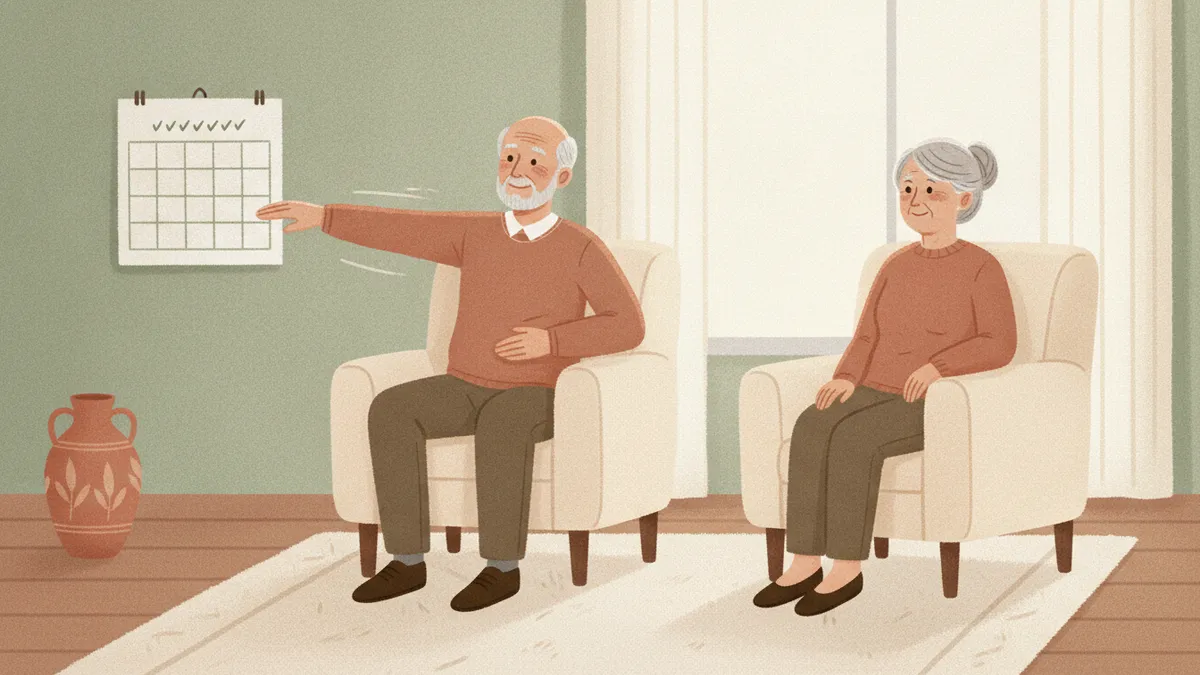
Four weeks is just enough time to turn a wish into a habit. A 28-day chair workout gives you structure without pressure: short seated sessions, a theme for each week, and a visible sense of progress as the days add up.
This guide lays out a sensible four-week arc you can follow, explains why the structure works, and shows how a personalized plan takes the guesswork out of it. The movements draw on chair tai chi: slow, flowing and gentle.
Why plan instead of improvise
When you improvise, every morning starts with a decision: what should I do today? That tiny decision is enough to stop many people. A plan removes it. You wake up, sit down, and the day's session is waiting.
A plan also builds gradually. The first days introduce breathing and simple moves, later days add arcs and spinal movement, and the last week ties it all into a flow. You never face something wildly harder than yesterday.
The four-week arc
Week 1: arrive and loosen
Theme: comfort and breath.
Sessions are short, around 8 to 10 minutes. You learn the posture, the breathing pattern and the first simple movements: shoulder rolls, wrist circles and the basic raising and lowering of the arms.
Goal: show up every day and finish feeling that it was easy.
Week 2: learn the flow
Theme: arcs and rhythm.
Sessions grow to around 10 to 12 minutes. You add the classic tai chi movements: raising the ball, parting the curtains, gentle pushing. You start linking them into short sequences.
Goal: movements begin to feel familiar.
Week 3: add the spine and the center
Theme: gentle twists, sways and weight awareness.
Sessions are 12 to 15 minutes. You include slow torso turns, side sways and cloud hands, with more attention to posture and the sit bones.
Goal: the middle of the body joins the arms, and the whole movement feels connected.
Week 4: put it together
Theme: flowing sequences and calm.
Sessions are about 15 minutes. You link all your movements into longer, unhurried sequences and finish with deeper stillness.
Goal: a complete practice you can keep doing after the month ends.
A sample week-two session
| Time | Practice |
|---|---|
| 0 to 2 min | Sit tall, breathing, shoulder and wrist loosening |
| 2 to 4 min | Raise the ball, 6 times |
| 4 to 7 min | Part the curtains, 6 each side |
| 7 to 10 min | Gentle push, 6 times, then link all three movements in a loop |
| 10 to 12 min | Cloud hands, slow, then stillness |
Notice how every movement is repeated rather than rushed through. Repetition is what turns movement into comfort.
What makes a 28-day plan stick
Small daily commitments. Ten minutes is easier to say yes to than forty.
A visible streak. Marking off days gives a quiet reward every time.
Gradual progression. If the plan grows slowly, you keep up.
Flexibility. Rest days and missed days are part of life. A plan that lets you resume without guilt keeps you going.
A clear start. Opening the day and pressing start is easier than choosing a video.
Personalizing the plan
Everyone arrives with a different starting point. Someone with tight shoulders may want more loosening early on. Someone who loves a good stretch may enjoy more spinal work. Someone short on time needs shorter sessions.
Flowsit chair tai chi plan handles this through a short quiz about your comfort level, goals and preferences, then builds a personalized 28-day chair tai chi plan around your answers. Each day brings a seated session of about 10 to 15 minutes, guided step by step with a timer. Your progress and daily streak are saved, so you can see your four weeks taking shape.
How to prepare for day one
- Choose your chair. Sturdy, no wheels, flat seat, knees at an easy angle.
- Pick your time. The same time every day if you can.
- Choose your spot. A bright, quiet corner with space to open your arms.
- Set up your screen, if you use one, at eye level.
- Decide what happens after. A cup of tea, a stroll, a note on the calendar. A pleasant finish makes the start easier.
Dealing with the rough patches
Day 5 slump. The novelty fades about here. Remind yourself that a short, easy session still counts.
Mid-plan stiffness. Go smaller. Slower is always allowed.
Missed days. Pick up where you left off. Do not double up to catch up.
Boredom. Play soft music, move your chair to a new spot, or practice with a partner in the same room.
Doubt. Ask what has already improved: the ease of starting, the calm after, the days stacked up.
Safety and expectations
The plan is gentle movement for well-being. It does not diagnose or treat any condition, and results vary. If you have pain, dizziness, a recent injury or a health condition, check with your doctor or physical therapist before you begin, and stop any movement that feels wrong. Stand up slowly after each session.
What you may feel at day 28
Not a dramatic transformation, but a quiet shift: you have a routine you enjoy, the movements feel familiar and you have proof that you can show up for yourself every day for a month. For a lot of people, that sense of capability is the most valuable result. It carries into everything else you do.
After the 28 days
- Repeat your favorite week whenever you want a familiar session.
- Keep a short daily routine, even five minutes, to keep the habit alive.
- Invite a friend to practice alongside you.
- Move on to longer sessions when you feel ready.
A quick weekly check-in
At the end of each week, take two minutes to look back. Write down how many days you practiced, which movement you enjoyed most and what felt awkward. There is no grade. The point is to notice patterns: perhaps mornings work better than evenings, perhaps the cloud hands movement is your favorite, perhaps shoulders feel tight on Mondays. Those small notes help you shape the next week and make the plan truly yours.
Who a four-week plan suits best
- Newcomers who want a clear path instead of a pile of videos.
- Returners who exercised in the past and want a gentle way back.
- Busy people who can spare ten to fifteen minutes but not an hour.
- Anyone who likes seeing progress in a streak or a calendar.
Read on
To see how a single session works, try the 10-minute chair routine. For the movements behind it, read about chair tai chi, and if you want to compare formats, see the guide to choosing a tai chi app.