Chair Tai Chi for Seniors: A Calm Daily Routine You Can Keep
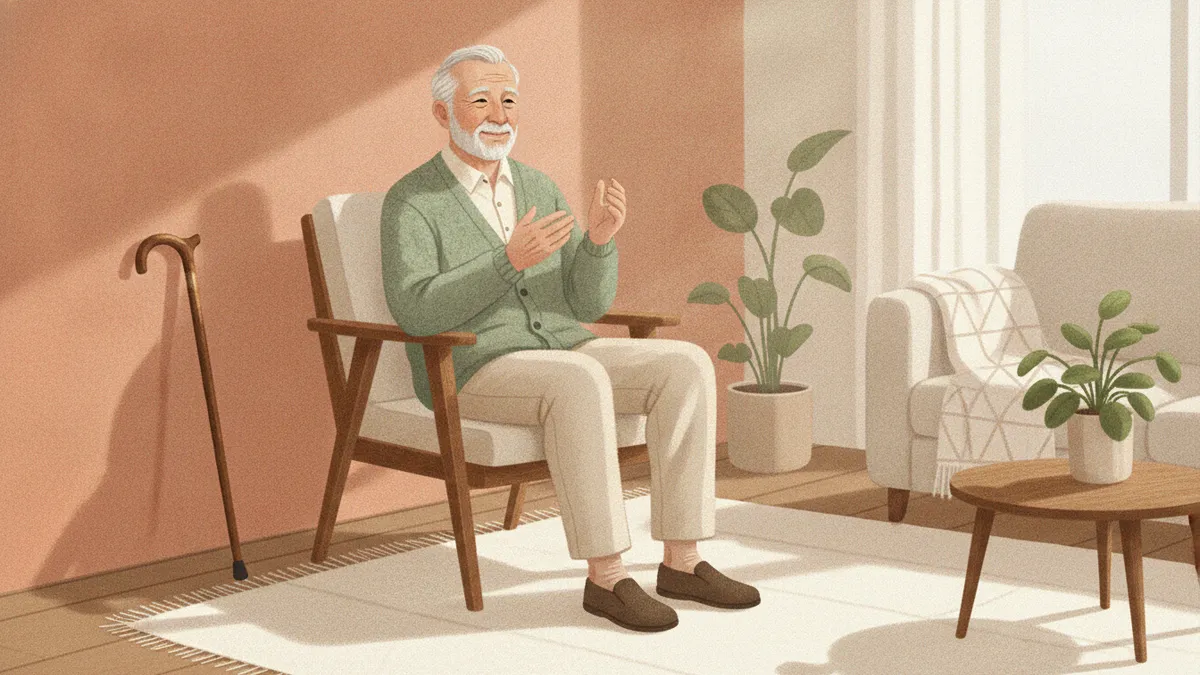
For many seniors, chair tai chi is the first exercise in years that feels kind from the very first minute. It is slow, it is supported, it asks nothing of your knees, and it can be done in your living room in a cardigan and slippers. There is no pressure to keep up, no mirror full of strangers and no fear of falling behind or falling down.
This guide is written for adults in their sixties, seventies and beyond who want to move a little every day. It covers why seated tai chi suits this stage of life, how to set up safely, a sample session, and how to keep going once the novelty fades.
Why seated practice fits this stage of life
As the years go by, many of us find that long standing is tiring, that stairs ask more of us, and that confidence in balance matters more than it used to. Those are real, ordinary things, and a good routine respects them.
A chair does three useful things:
- It supports you. Your weight is on a stable seat, so you can relax your muscles instead of bracing them.
- It removes the fall worry. When you are not afraid of tipping, your shoulders drop and your breathing slows. That is half of what tai chi is about.
- It keeps the door open on bad days. Stiff morning? Poor night of sleep? A smaller seated session still happens, and so the habit survives.
What a session feels like
Tai chi is often described as meditation in motion, and for seniors that description fits well. Movements are slow, continuous and circular. You follow your own hands with your eyes. You breathe in as the arms rise, out as they lower. Nothing is sudden.
A typical ten to fifteen minute session might look like this:
- Arrive (2 minutes). Sit tall, feet flat, hands on thighs. Breathe slowly through the nose.
- Loosen (3 minutes). Wrist circles, finger opening and closing, shoulder rolls, neck turns with eyes leading.
- Flow (6 to 8 minutes). A short sequence repeated: lift the arms like holding a large balloon, part the hands, gently turn the torso, wave hands like clouds.
- Settle (1 to 2 minutes). Hands to lap, a long exhale, a quiet pause.
You can feel the difference between a rushed day and a session. People often describe finishing with a quiet, unhurried feeling, as if the day had slowed a notch.
A safe setup for older adults
Small details protect your practice.
Pick the right chair. Firm, stable, no wheels, flat seat. If arms get in the way of your elbows, choose a chair without them or sit toward the front. A chair against a wall adds a bit of reassurance.
Check the floor. Non-slip surface, shoes or grippy socks, nothing to trip over when you stand afterwards.
Keep help close. Water, a phone and, if you use one, your cane or walker within reach.
Stand up slowly. After the session, pause before you stand so your body can catch up.
Talk to your doctor if you have concerns. Dizziness, recent surgery, pain, or a condition that affects balance or heart are all reasons to get a green light from a doctor or physical therapist before you start. This is a gentle practice, but it is still movement, and your health history matters.
Moves that work well seated
You do not need a long list. A few classic movements, repeated, carry a whole session.
- Raise and lower the arms. Palms soft, as if lifting and lowering a large light ball.
- Part the horse's mane (arm opening). One hand rises, the other sinks, switching sides, with a gentle turn of the chest.
- Wave hands like clouds. Hands drift side to side in front of the body at the pace of a slow tide.
- Gentle push. Palms press forward as if easing a door open, then draw back.
- Spinal sway. A slow lean forward and back, then side to side, within a comfortable range.
Each of these can be made smaller if you feel tight. In tai chi, quality means softness and continuity, not range.
Making it a daily habit
People rarely stop because they dislike the movement. They stop because life gets in the way, or because they are not sure what to do today. A routine that already knows the answer helps.
Flowsit chair tai chi plan gives you that. A short quiz about your comfort level and what you want from your practice builds a personalized 28-day plan. Each day you open a seated session of about 10 to 15 minutes, follow the movements step by step, and watch a timer so you know where you are. Your progress and your daily streak are saved. If you miss a day, you pick up the next one without drama.
If you like routines, this is easy to tie to something you already do. Many people practice right after breakfast, with their morning tea nearby, or before the afternoon news.
What seated tai chi can and cannot do
It is gentle movement and a calm practice. People often enjoy how it feels, and it can fit into a wider approach to staying active and mindful. It is not a medical treatment and it does not claim to change a condition. Think of it as one friendly habit among others, such as walking when you can, staying social and keeping up with your regular check-ups.
A first-week plan for beginners
- Day 1: Five minutes of breathing and shoulder rolls.
- Day 2: Rest or repeat day 1.
- Day 3: Seven minutes: add raising and lowering the arms.
- Day 4: Rest or repeat.
- Day 5: Ten minutes: add the hand-parting movement.
- Day 6: Ten minutes: add clouds.
- Day 7: Ten minutes, and notice how you feel compared with day 1.
Keeping it enjoyable
Pair the session with a pleasant cue: a favorite playlist of quiet music, a sunny spot, a chair by the window. Treat it as a small appointment with yourself rather than an assignment. If you can, share the idea with a friend or partner; practicing in the same room, each on your own chair, makes it feel like company.
Over weeks, the practice tends to become easier and more familiar, and so does the time you spend on it. That sense of familiarity is worth as much as any single movement.
Next steps
If you want the broader picture first, read the main guide to chair tai chi, or see how to start tai chi after 60. Ready for a guided plan? The next step is a short quiz that shapes your 28 days.